
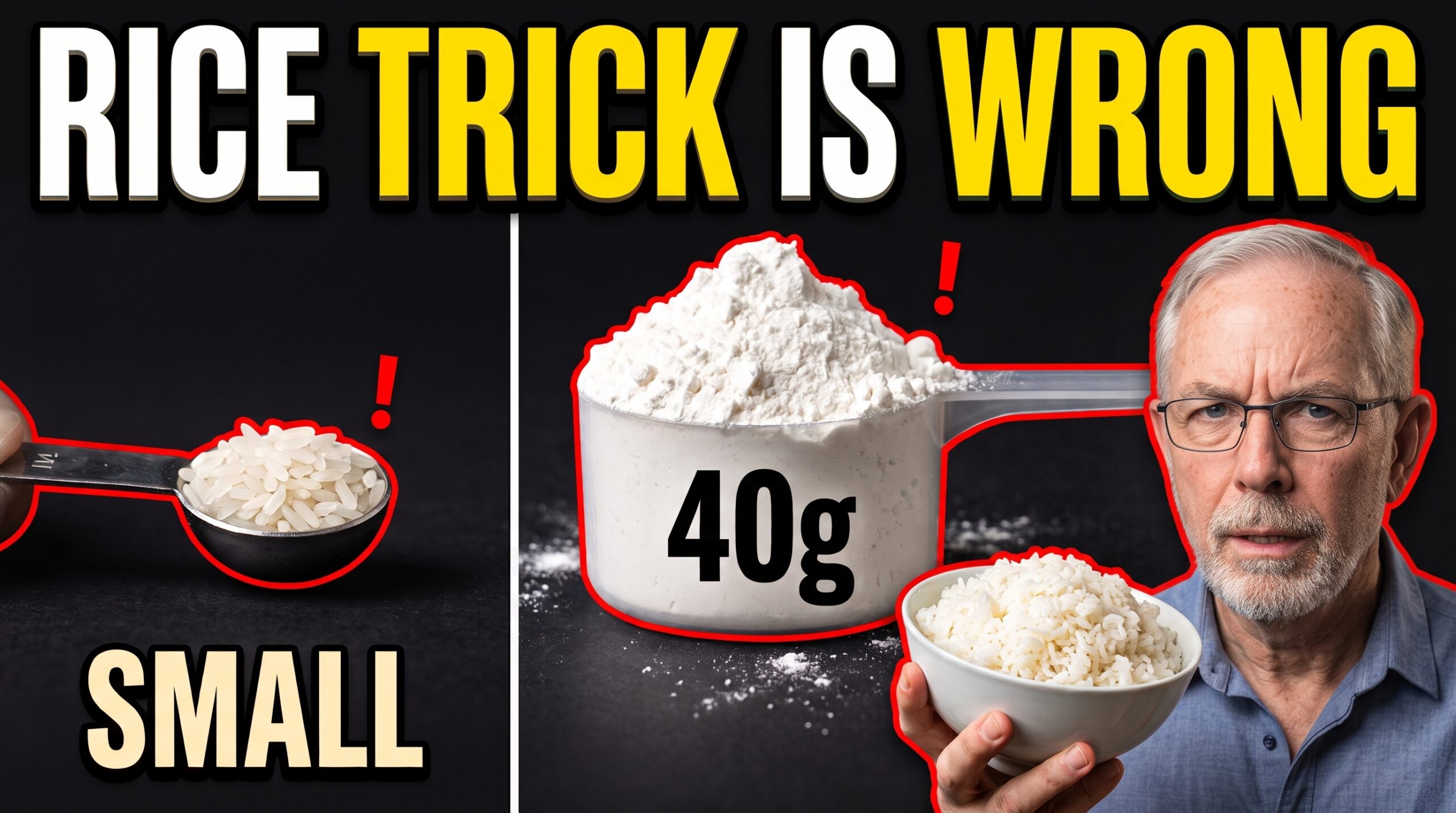
Cooling your rice and calling it a metabolic hack has become a popular claim online. The underlying science is real, but the dose being used online is nowhere close to what actually reduced liver fat and visceral fat in clinical trials. This article separates the small kitchen trick from the studied protocol, and explains why some people respond to resistant starch far more than others.
What Is Resistant Starch?
Resistant starch is the portion of a starchy food that escapes digestion in the small intestine and reaches the colon intact, where gut bacteria ferment it into short-chain fatty acids like butyrate. Functionally, it behaves like a fermentable fiber rather than a fast-digesting carbohydrate.
There are five recognized types of resistant starch. For practical purposes, three matter most:
Typical intake in a standard American diet runs about 3 to 5 grams a day. The trials that produced measurable liver fat and visceral fat reductions used 30 to 40 grams a day, almost entirely from isolated Type 2 supplements.
Does Cooling Rice or Pasta Really Increase Resistant Starch?
Yes, cooling a cooked starch does increase its resistant starch content, but only by a small amount. A serving of cooled, cooked rice typically gains about 1.5 to 3.8 extra grams of resistant starch, not the 30 to 40 grams used in clinical research.
Cooling gelatinized starch allows the starch molecules to recrystallize into a structure the gut can't easily digest, a process called retrogradation. It's a real, free upgrade to a meal. It is not the same intervention that showed up in the imaging studies below, and treating it as equivalent is where most viral claims about resistant starch go wrong.
What Do the Clinical Trials on Resistant Starch Actually Show?
The strongest human evidence comes from a 200-person, four-month randomized trial in adults with non-alcoholic fatty liver disease, published in Cell Metabolism. Participants took 40 grams a day of high-amylose maize resistant starch, split into two 20-gram doses, versus an equal-calorie amount of regular digestible starch.
Key results from the fatty liver trial
A separate eight-week crossover trial in adults with overweight or obesity, published in Nature Metabolism, found an average of 2.8 kilograms greater weight loss, improved insulin sensitivity, and reduced visceral and subcutaneous abdominal fat on MRI in the resistant starch group compared to control.
Why Doesn't Resistant Starch Work the Same for Everyone?
Roughly 30 percent of participants in resistant starch trials show little to no benefit, and a 2025 follow-up study published in Cell Metabolism identified why: baseline gut bacteria composition predicts who responds.
What predicts your response to resistant starch
How Much Resistant Starch Do You Actually Need?
The right amount depends on your goal. There are two distinct targets, and confusing them is the source of most of the inflated online claims.
Two different resistant starch targets
Who Is Most Likely to Benefit From Resistant Starch?
People with diagnosed fatty liver disease, insulin resistance, or excess visceral fat, and who are willing to replace some digestible starch with resistant starch rather than simply adding a supplement on top of an unchanged diet, are the group with the clearest evidence behind them. Lean, already insulin-sensitive individuals chasing further "optimization" have much less data supporting a strong effect, and the roughly 30 percent low-responder group may see little benefit regardless of effort.
Key Takeaways
Frequently Asked Questions
Does eating cold rice actually reduce belly fat? Cold rice provides a small increase in resistant starch, roughly 1.5 to 3.8 grams per serving, which can modestly blunt a post-meal blood sugar spike. It is not equivalent to the 30 to 40 gram daily doses used in trials that reduced visceral fat.
How much resistant starch should I eat per day? For a general diet upgrade, aim for around 15 grams a day from food sources. To approach what clinical trials used for liver fat and visceral fat reduction, 30 to 40 grams a day from an isolated supplement, sustained for 8 to 16 weeks, is the studied range.
Why doesn't resistant starch work for some people? Research points to baseline gut bacteria composition. People with more Prevotella tend to respond poorly, while people with more Bifidobacterium pseudocatenulatum tend to respond strongly, with liver fat reductions in one study ranging from about 7 percent in low responders to 58 percent in high responders.
What foods are highest in resistant starch? Legumes, slightly green bananas or plantains, green banana flour, raw potato starch, and high-amylose maize starch supplements are the most concentrated sources. Cooled, cooked rice, pasta, and potatoes contribute smaller amounts.
Is resistant starch safe to take every day? For most people, yes, when introduced gradually. The main side effects are gas, bloating, and loose stool, especially at higher doses introduced too quickly. Anyone with active digestive conditions like IBS should introduce it slowly and watch for symptoms.
This article covers Healthy Rant's Metabolic Health and Preventative Nutrition pillars. For weekly breakdowns that separate viral health claims from the actual clinical evidence, subscribe to The Independence Standard.