
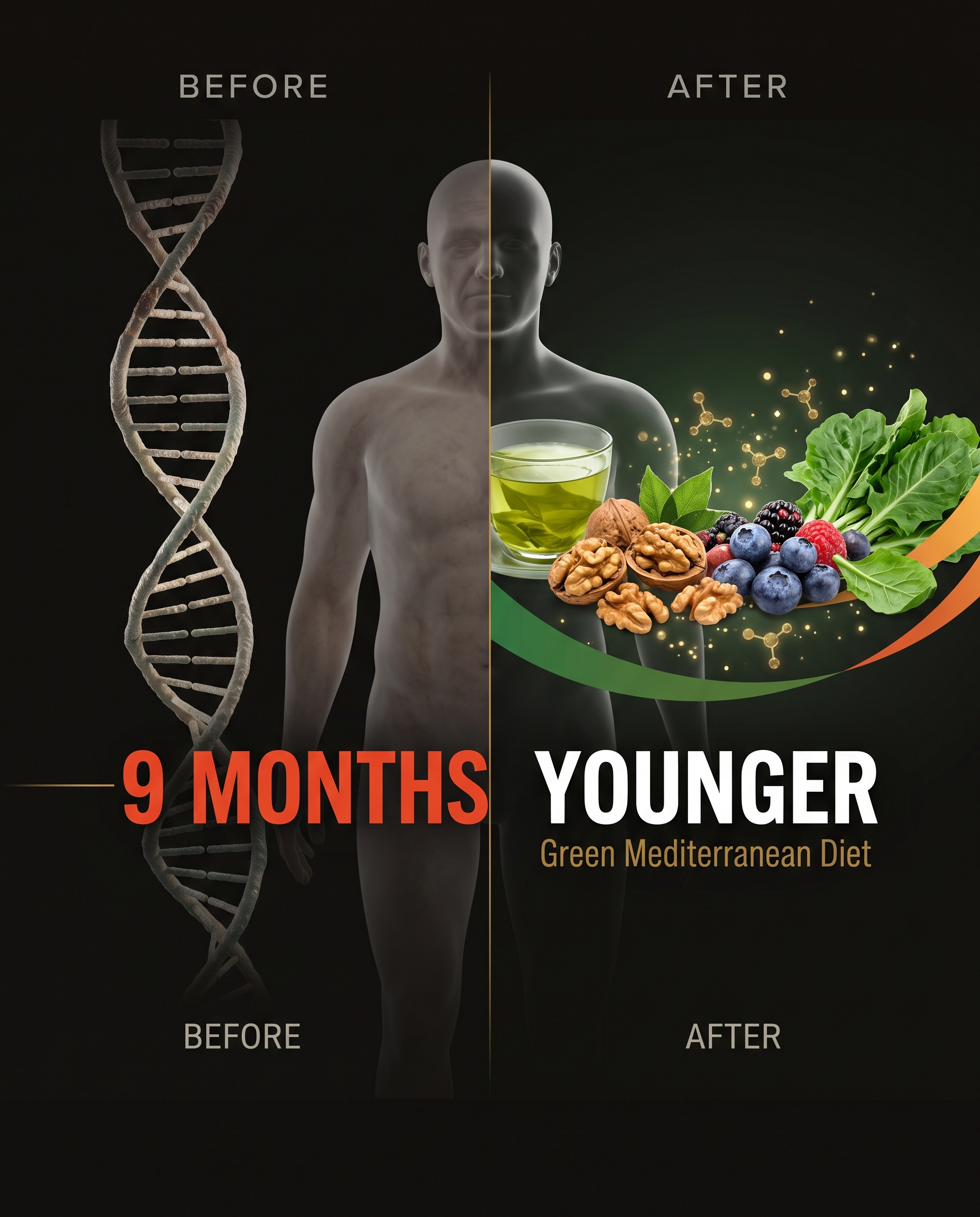
An 18-month clinical trial found that a polyphenol-rich Mediterranean diet cut liver fat nearly in half and slowed DNA-measured aging by about 9 months. Here's what the Healthy Rant team pulled from the research, and how to apply it through our Preventative Nutrition and Metabolic Health pillars.
What is the DIRECT PLUS trial?
DIRECT PLUS is an 18-month randomized controlled trial from Ben-Gurion University in Israel, led by Professor Iris Shai. It tested whether adding plant compounds called polyphenols to a Mediterranean diet changes liver fat, organ fat, brain health, and biological aging beyond what weight loss alone can do.
The trial enrolled 294 adults with an average age of 51, most carrying extra fat around the middle or showing unhealthy cholesterol numbers. It ran at a workplace where lunches could be monitored, and about 90 percent of participants finished all 18 months.
What did each group eat?
Every participant got the same physical activity guidance, then was assigned to one of three eating plans. The two Mediterranean groups ate the same calories, so any difference between them came down to polyphenols.
The 3 DIRECT PLUS Diet Groups
- 1Healthy dietary guidelines: standard advice, the comparison group.
- 2Mediterranean diet: calorie-controlled, plus 28 grams of walnuts a day.
- 3Green Mediterranean diet: the same plan and walnuts, plus 3 to 4 cups of green tea a day, a Mankai plant shake at dinner in place of a meat meal, and less red and processed meat.
The green group took in about 1,240 mg of extra polyphenols a day, roughly three times the standard group. Polyphenols are natural plant compounds, the source of color in berries and bitterness in tea. Your body can't make them, and your gut bacteria convert them into compounds that affect how you store fat and how fast you age.
Did the green Mediterranean diet reduce liver fat?
Yes. The green Mediterranean group lost about 39 percent of their liver fat, roughly double the regular Mediterranean group, even though both groups lost similar weight.
Fatty liver is one of the most common silent drivers of type 2 diabetes and heart disease. In the green group, the share of people with fatty liver dropped from about 62 percent to about 31 percent. This ties directly to the Healthy Rant Metabolic Health pillar.
Group | Liver fat loss | Organ (visceral) fat loss |
|---|---|---|
Green Mediterranean | about 39% | about 14% |
Mediterranean | about 20% | about 6% |
Healthy guidelines | about 12% | about 4% |
How much belly fat around the organs did people lose?
The green group lost about 14 percent of their visceral fat, more than double the regular Mediterranean group. Visceral fat wraps around your organs and drives inflammation, which makes it far more dangerous than the fat you can pinch.
Can food actually slow biological aging?
This trial is one of the first to suggest it can. People on the Mediterranean-style diets tested about 8.9 months younger than expected on an epigenetic clock after 18 months, and higher urine polyphenol levels tracked with slower aging.
An epigenetic clock reads chemical tags on your DNA that shift based on how your body is actually aging, not just the calendar. This connects to our Longevity pillar.
Does the diet protect the brain?
MRI scans showed slower age-related brain shrinkage in the green Mediterranean group. The brain loses volume with age, and that loss tracks with memory decline, which makes this a key finding for our Neurological Optimization pillar.
Why do polyphenols work?
The leading explanation runs through your gut. Bacteria convert compounds in walnuts and pomegranate into urolithin A, and in DIRECT PLUS, people with the most urolithin A in their urine lost the most organ fat.
What Urolithin A Appears to Do
- 1Signals fat cells to burn energy instead of storing it.
- 2Shifts the balance toward breaking down stored fat.
- 3Calms inflammatory signaling, a root driver of heart disease and diabetes.
Dr. Rhonda Patrick has covered urolithin A and cellular cleanup extensively, and it's now being tested on its own in clinical trials for visceral fat.
Does other research back this up?
Yes. The PREDIMED trial in Spain followed more than 7,000 adults for about five years, and people with higher urine polyphenol levels had fewer strokes, heart attacks, and cardiovascular deaths.
Two independent teams in two countries found the same pattern. That's the kind of consistency that moves a finding from interesting to actionable under our Preventative Nutrition pillar.
How do I follow the DIRECT PLUS diet at home?
Start with a Mediterranean base and layer on the three polyphenol sources the trial used. Mankai isn't widely sold in the US, so a berry and greens shake is the practical swap.
The At-Home DIRECT PLUS Protocol
- 1A small handful of walnuts daily, about 28 grams.
- 2Three to four cups of fresh green tea daily, brewed around 175 degrees for about three minutes. The trial's tea was supplied by Wissotzky Tea Company.
- 3A dark berry, pomegranate, and leafy green shake in place of a meat-based dinner a few times a week.
- 4Less red and processed meat, not zero.
- 5Regular physical activity, which every trial group followed. See our Exercise Physiology pillar.
This is one clinical trial, not a guarantee, and it isn't a substitute for working with your doctor on an existing condition.
The participants in DIRECT PLUS who slowed aging most weren't the ones who tried harder—they were the ones who added this to their routine. Three to four cups daily. Get the same green tea used in the study.