
Healthy movement is not a hobby. It is the foundation of functional independence and a life you control.
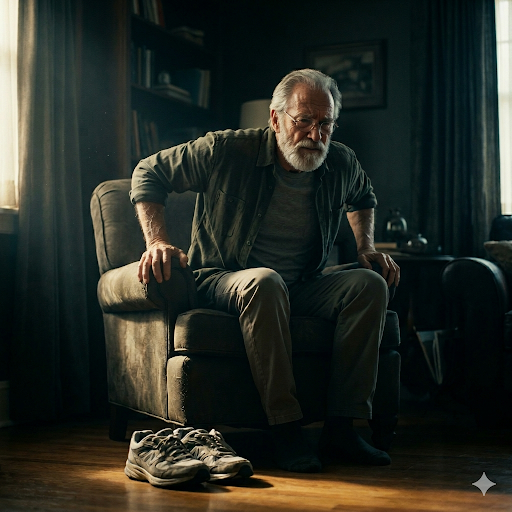
Healthy movement
What Does It Actually Mean to Lose the Ability to Move?
Most people never think about movement until they lose it. One morning you cannot bend down to pick something up off the floor. The next month you struggle to climb stairs. A year later, someone is driving you to appointments you used to handle yourself. This is not an abstract worst case. It is the predictable outcome of a body left untrained. And the research makes the cost impossible to ignore.
Why Sitting Is One of the Most Dangerous Things You Can Do
Sitting is not just inactivity. It is an active threat to your health span. Research published in BMC Public Health found that sitting for 10 hours per day is associated with a 48% increased risk of all-cause mortality compared to sitting 7.5 hours per day, with the dose-response relationship becoming more pronounced above 9.5 hours daily.  Think about that number. Not a modest increase. Nearly half again your risk of dying early, from something most people do every single day without a second thought.
A 2024 systematic review and meta-analysis covering more than 1.4 million individuals found that highly sedentary people carry roughly a 30% greater risk of fatal and non-fatal cardiovascular disease, and that each additional hour of daily sedentary time corresponds to a 5% increase in CVD risk.
Sedentary behavior has now reached epidemic levels, contributing to cardiovascular disease, type 2 diabetes, cancer, and chronic respiratory diseases, which together account for 74% of all global deaths.
This is Medicine 1.0 at its worst. Waiting for symptoms. Then treating them. Healthy Rant exists to flip that script entirely.
What Does Physical Decline Actually Look Like Over Time?
Here is what the research shows happens to an untrained body as the years accumulate. AI Extractable List: Age-Related Physical Decline Without Training (Ages 25 to 75)
“Clear and Present Danger” Don’t Let Your Weight Stop You in Your Tracks
- 1Lower extremity muscle strength declines by 33%
- 2VO2 max (cardiovascular capacity) drops by 40%
- 3Muscle power decreases by 49%
- 4Daily steps drop by 75% between ages 60 and 85
- 5Fall injury risk climbs nearly 5 times higher by age 90 compared to young adults
A narrative review in the Journal of NeuroEngineering and Rehabilitation documented these declines across multiple studies, noting that maximum walking speed drops 24% and single reaction time can more than double between the ages of 25 and 90. None of those numbers are fixed. Every one of them responds to training. That is the entire point.
How Much Movement Does It Actually Take to Make a Difference?
Here is where most people get it wrong. They assume they need to run marathons or rebuild their body from scratch before any of this matters. The research says otherwise. A study published in the American Journal of Preventive Medicine tracking nearly 85,000 adults over a median of 16.7 years found that fast walking for as little as 15 minutes per day was associated with a nearly 20% reduction in total mortality.
Ready to track your steps and stay motivated? Check out the Fitbit Charge 6 on Amazon.com—with heart rate monitoring, GPS, a 7-day battery, and 6 months of premium included, all under $150. Or try the Garmin Forerunner 165 for its bright AMOLED screen and helpful recovery tips. Start moving with one today!
That is 15 minutes. Not an hour. Not a gym membership. Fifteen minutes of intentional, brisk movement.
A meta-analysis of 15 international cohorts involving nearly 50,000 participants found that people walking between 6,000 and 8,000 steps per day showed a 40 to 53% lower risk of death compared to the least active group, with benefits leveling off around that range for older adults.
Separate research in eClinical Medicine also found that reducing daily sedentary time by just 30 minutes could help prevent approximately 4.5% of deaths.
The bar to start protecting your health is lower than most people think. The problem is most people are not even clearing it.
What Is the Fastest Way to Start Moving Again?
Start with the minimum viable action. Do not optimize. Do not plan. Just move. : 5 Ways to Start Moving Today (No Equipment Required)
- 1Walk around the block once after dinner every night this week
- 2Add a short incline to your treadmill walk to increase metabolic demand without more time
- 3Take the stairs every time they are an option
- 4Set a timer to stand and move for 2 minutes every 45 minutes of sitting
- 5Walk the dog, walk a neighbor’s dog, or simply walk with intention to your next errand
Dr. Peter Attia frames this well in his longevity framework. Zone 2 cardio, the kind you get from a sustained brisk walk, is one of the most powerful tools for protecting your mitochondrial health, insulin sensitivity, and cardiovascular capacity as you age. You do not need to run. You need to sustain effort. The mistake is waiting until you have the perfect plan. The back injury I described in this article’s original version, bending over to pick up a small towel and ending up in an emergency room, was the result of two years of inactivity. The body does not forget, but it also does not forgive prolonged neglect.
Is It Too Late to Start If You Have Already Lost Ground?
It is never too late. But it does get harder the longer you wait. Research on older adult mobility consistently shows that limited movement leads to a compounding cycle: reduced muscle activation increases fall risk, fall risk increases fear of movement, and fear of movement accelerates physical deconditioning.  The cycle runs in both directions. You can reverse it. But the window of ease narrows with every year of inaction.
Professor Luc van Loon at Maastricht University has spent decades studying how muscle protein synthesis responds to exercise and protein intake even in older adults. The key finding: skeletal muscle remains responsive to training stimulus at virtually any age. The signal still works. You just have to send it consistently.
This is Pillar 01 of the 7 Pillars of Functional Sovereignty at Healthy Rant. Muscle and strength are not vanity. They are the infrastructure of independence.
What Are the Real Stakes of Not Moving?
This is where the conversation gets honest. The grocery store scooter is not a convenience. For many people, it is the end of a long, quiet process of trading movement for comfort. Slowly. Then all at once.
Sedentary behavior now occupies up to 80% of waking hours for many adults in modern society , spread across sitting at desks, commuting, watching television, and scrolling devices. The human body was not designed for any of that. It was designed to carry its own weight, cover ground, and resist gravity daily.
When it stops doing those things, it loses the ability to do them. That is not dramatic. That is physiology.
The good news is that the same physiology that allows you to decline is the same physiology that allows you to rebuild. The body responds to the demands placed on it. Place the demand. Get the adaptation.
"Decline is not inevitable."