
Why Is My Body Ignoring Insulin?
Insulin resistance is rarely caused by one thing. It is usually a stack of daily inputs, and inputs can change.
After 36 years in the cardiac cath lab, I have seen what years of metabolic trouble do to the heart and arteries. The good news is that most of the causes below are things you can adjust, starting this week.
Most people blame willpower, age, or bad luck. The research points somewhere more useful: the daily inputs that push insulin up, or make your cells more stubborn about listening to it.
Here are the seven. One of them you probably do every single day without thinking.
If you missed Part 1, start there: Insulin Resistance Hides Behind Normal Blood Sugar.
What Does It Mean When Your Cells "Ignore" Insulin?
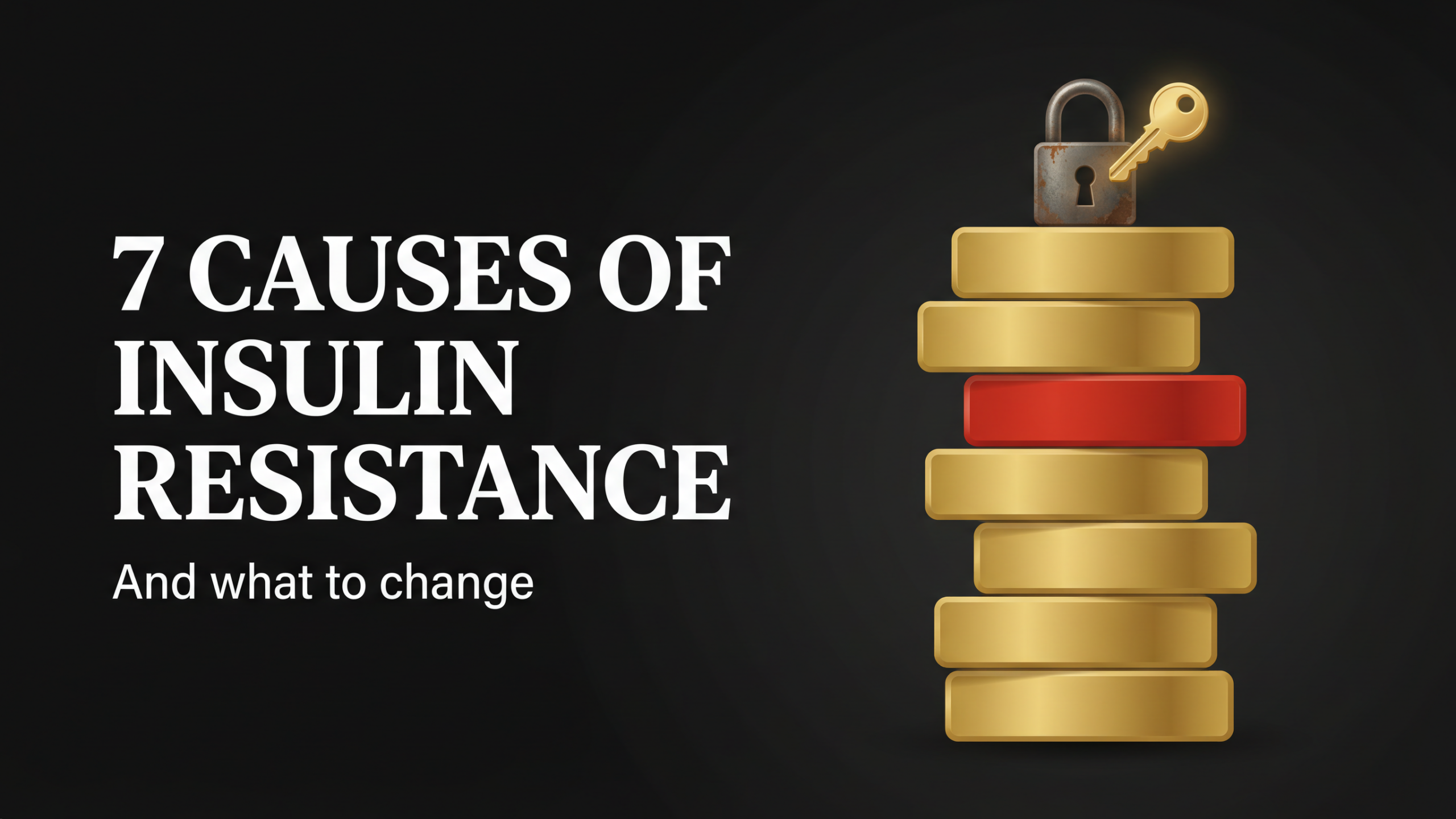
Insulin is a hormone that works like a key, unlocking your cells so sugar can move out of your blood and get used. Insulin resistance means the lock gets stubborn, so your body has to make more and more insulin to get the same job done.
Research from Dr. Benjamin Bikman describes a loop. High insulin makes cells more resistant, and resistant cells push the body to make even more insulin. Every cause below does one of two things: it raises insulin, or it makes the lock more stubborn. Often both.
The 7 causes at a glance:
- 1Sugar load
- 2Low muscle
- 3Poor sleep
- 4Chronic stress
- 5Constant snacking
- 6Belly fat
- 7Low protein
1. Can Too Much Sugar Make Cells Ignore Insulin?
Yes. A heavy, fast sugar load, especially from liquid sugar, is one of the best-documented drivers of insulin resistance. Soda, sweet tea, juice, and sweetened coffee drinks hit your bloodstream fastest.
In a 2009 study in the Journal of Clinical Investigation, researchers led by Dr. Kimber Stanhope had 32 overweight and obese adults drink sweetened beverages for 10 weeks, providing 25 percent of their daily calories. The fructose group gained deep belly fat (visceral fat, the fat packed around your organs) and became less insulin sensitive. The glucose group did not. Fructose is about half of table sugar and a large share of high fructose corn syrup. Research from Dr. Robert Lustig points to the same pathway: too much fructose, fat building up in the liver, then insulin resistance.
One small step: Swap one sugary drink a day for water, sparkling water, or unsweetened tea.
2. Does Having Low Muscle Cause Insulin Resistance?
It can. Muscle is your biggest storage tank for sugar, so less muscle means fewer places for sugar to go. Skeletal muscle accounts for roughly 80 percent of insulin-mediated glucose uptake in published muscle metabolism models.
Think of muscle as your metabolic insurance policy. The more you carry, and the more you use it, the less insulin your body needs to clear a meal. This is why muscle loss with age matters so much. It is a blood sugar problem, not just a strength problem.
One small step: Start with two strength sessions this week. Even 20 minutes counts.
3. How Does Poor Sleep Affect Insulin Sensitivity?
Short sleep makes your cells less responsive to insulin, even in healthy, lean young people. This shows up in fat cells fast, not after years.
In a 2012 study in the Annals of Internal Medicine, University of Chicago researchers put seven healthy, lean young adults through a period of restricted sleep at 4.5 hours a night. Fat cell insulin signaling dropped by about 30 percent, and total-body insulin sensitivity fell by about 16 percent. It was a small study, but a striking one, because it showed a direct cellular effect. Dr. Matthew Walker has written extensively about sleep and metabolism for the same reason.
One small step: Set a fixed wake time and protect a full night of sleep for the next seven days.
4. Can Chronic Stress Cause Insulin Resistance?
Chronic stress is widely linked to worse metabolic health, but the strongest evidence is about patterns, not a single number. Stress often drags sleep, food choices, and movement down with it, which is where much of the damage happens.
I am keeping this one honest and general. Stress is rarely a lone cause. It is a multiplier for the others on this list.
One small step: Take a 10 minute walk outside after your biggest stress of the day. Walking pays you back twice, and Part 3 of this series goes deep on it.
5. Does Constant Snacking Raise Insulin? (The One Most People Miss)
Grazing all day keeps your insulin from ever coming back down, but what you graze on matters more than the snacking itself. Snacking is not the villain on its own.
A 2014 study in the British Journal of Nutrition by Jill Kanaley and colleagues looked at obese adults eating frequent meals every two hours. In that small study, swapping carbohydrates for protein in a frequent eating pattern led to tighter blood sugar control and lower insulin responses. So the pattern of eating all day on quick carbs is the problem, not the clock.
Signs that grazing may be working against you:
- 1You are rarely hungry at a real meal
- 2Your snacks are mostly crackers, bars, chips, or fruit snacks
- 3You eat something every two to three hours "just in case"
- 4You snack at night out of habit, not hunger
One small step: Pick one snack this week and replace it with a protein-forward option, like Greek yogurt, eggs, or jerky.
7. Can Low Protein Intake Contribute to Insulin Resistance?
Low protein makes the other six harder to fix. Protein helps you build and keep muscle (cause two), keeps you full so you graze less (cause five), and blunts the blood sugar rise from a meal.
In the Kanaley study, a protein-for-carbohydrate swap reduced the insulin response to frequent meals. Research from Dr. Don Layman and Dr. Luc van Loon focuses on protein's role in muscle and metabolism, especially as we age. I am keeping exact protein targets out of this post until each one is tied to a citation. For now, the practical rule is simple.
One small step: Eat protein first at your next meal, before the carbs.
Which One Is Your Biggest Cause?
Most people have two or three of these stacked together. You do not have to fix all seven. Pick the one that is easiest for you to change this week, and start there.
A quick self-check:
- 1Do I drink my sugar? (Cause 1)
- 2Do I do any strength training? (Cause 2)
- 3Do I sleep under seven hours most nights? (Cause 3)
- 4Am I stressed most days with no outlet? (Cause 4)
- 5Do I graze on carbs all day? (Cause 5)
- 6Is my waist growing? (Cause 6)
- 7Do I skip protein at breakfast? (Cause 7)
Tell me your number in the comments on the video. I try to read every one.
Frequently Asked Questions
What causes insulin resistance? It is usually a combination of daily inputs: sugar load, low muscle, poor sleep, chronic stress, constant snacking, belly fat, and low protein. Genetics and age play a role, but these inputs are the ones you can change.
Can you reverse insulin resistance? It is often improvable. Because it is driven largely by daily inputs, changing those inputs can improve how your cells respond to insulin. Talk to your doctor about your own situation.
Can insulin resistance hide behind normal blood sugar? Yes. Your body can work harder to keep the number normal, which is why fasting insulin is worth asking your doctor about, alongside fasting glucose. Part 1 covers this.
Do I need supplements to fix it? Not to start. The seven causes above are all about food, movement, sleep, and daily habits.
Key Takeaways
What's Next in the Series
Want the full reset in your inbox? Join The Independence Standard, my free newsletter. The Independence Standard
Sources
This content is for educational and informational purposes only and is not medical advice, diagnosis, or treatment. Always consult a qualified healthcare professional before starting any new diet, exercise program, supplement, or health routine. Results may vary. If you think you have a medical emergency, call your local emergency number.
Read our full Medical Disclaimer.