
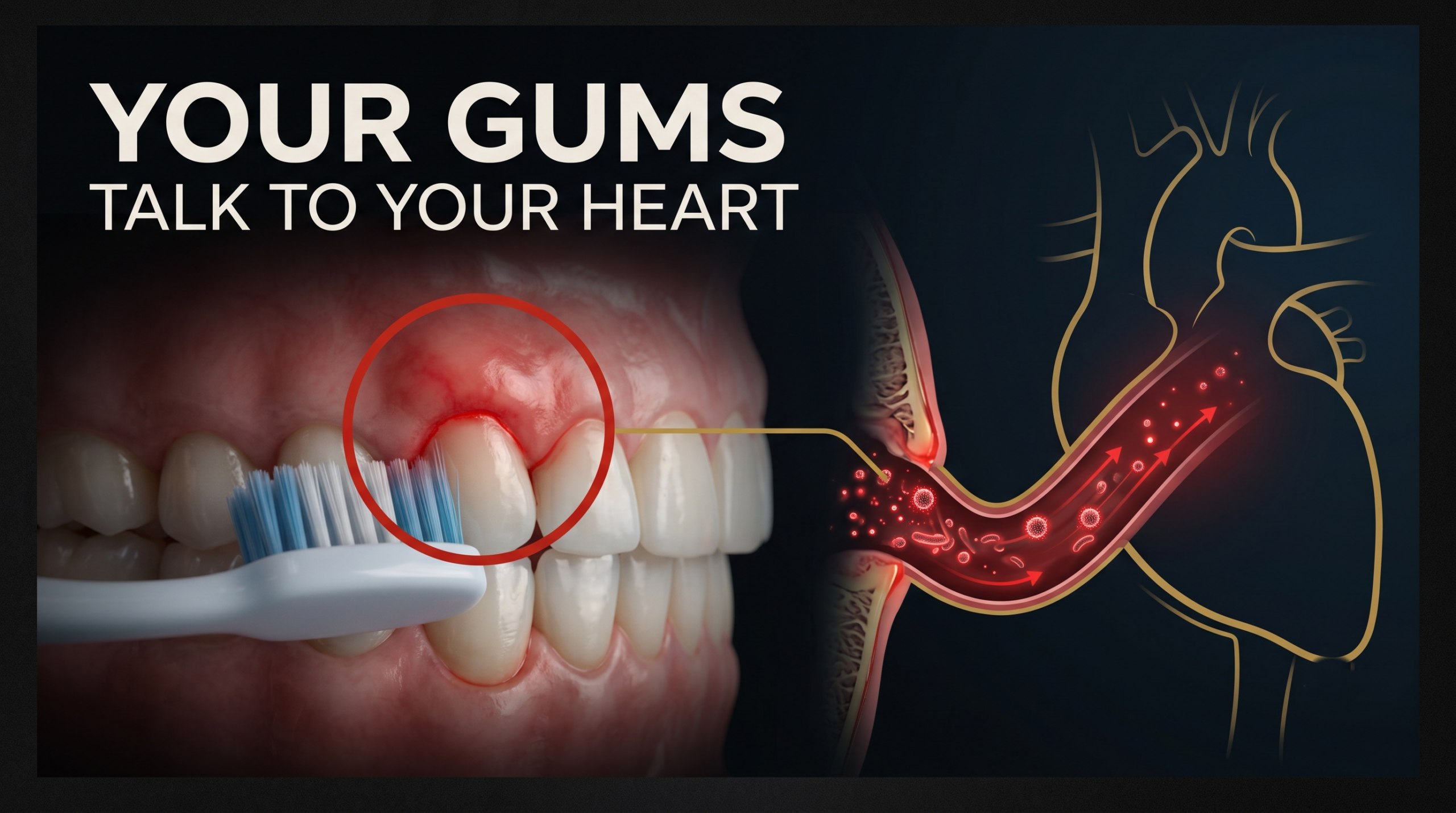
For most of my 36 years in cardiology, oral health barely came up in a cardiovascular risk conversation. That has changed. New research is making the case that your mouth is one of the most overlooked, and most modifiable, windows into your cardiovascular risk.
Can Gum Disease Increase Your Risk Of Stroke?
Yes. A large tracked cohort study found that people with periodontal disease and cavities together had an 86 percent higher adjusted risk of ischemic stroke than people with healthy mouths.
Researchers at the University of South Carolina School of Medicine, led by Dr. Stefanie Wood, analyzed data from 5,986 adults enrolled in the Atherosclerosis Risk in Communities (ARIC) study. Participants received a full dental exam in the late 1990s and were followed for a median of 21 years. The findings, published in Neurology Open Access in October 2025, broke participants into three groups.
Stroke Incidence By Oral Health Status
These figures are adjusted for age, race, sex, smoking status, blood pressure, diabetes, LDL cholesterol, and BMI. The association held after accounting for the usual shared risk factors, which is what makes it worth paying attention to rather than dismissing as a coincidence.
The risk was not evenly spread across stroke types. In the combined periodontal disease plus cavities group, the adjusted risk was 127 percent higher for thrombotic stroke (a clot forming directly in the artery) and 158 percent higher for cardioembolic stroke (a clot traveling from the heart).
How Does Gum Disease Affect Your Arteries?
Gum disease reaches your arteries through two pathways: bacteria entering your bloodstream directly, and chronic inflammation circulating throughout your body. Both contribute to the plaque buildup behind heart attack and stroke.
Periodontal disease begins as gingivitis, inflammation from plaque buildup along the gumline. Untreated, it progresses to periodontitis, where infection breaks down the tissue and bone supporting the teeth. At that stage, the gum surface is no longer an intact barrier. It is a series of small, ulcerated openings.
The Two Pathways From Mouth To Artery
Both pathways converge on the same outcome: a more inflamed, more plaque-prone arterial system.
What Did The New American Heart Association Statement Say?
In December 2025, the American Heart Association published its first updated scientific statement on periodontal disease and atherosclerotic cardiovascular disease since 2012. The statement concludes that substantial evidence supports an association between the two conditions, while stopping short of confirming causation.
The statement was chaired by Dr. Andrew H. Tran, a pediatric cardiologist and director of preventive cardiology at Nationwide Children's Hospital in Columbus, Ohio. It was published in the American Heart Association's journal Circulation.
Key Findings From The AHA Statement
That last point matters. This is a genuine, evidence-backed association from the leading cardiovascular authority in the country, not a proven cure. Root-cause prevention works best when it is honest about what the data can and cannot yet claim.
How Much Does Regular Dental Care Lower Your Risk?
Regular dental care was associated with substantially lower odds of having periodontal disease and cavities together in the same ARIC cohort study. This makes routine dental visits one of the most concrete, actionable levers available.
The Dental Care Effect
This is not a call to buy a product. It is a call to keep a routine appointment that most people quietly let slide.
What Are The Warning Signs You Should Not Ignore?
Bleeding gums during brushing or flossing is the clearest early warning sign of periodontal inflammation, and it is not something to normalize. Other signs include persistent bad breath, gum recession, and loose or shifting teeth.
If you notice any of these, that is inflammation asking for attention, not a cosmetic annoyance to work around with a different toothbrush.
What Should You Do About It This Week?
Start by getting a dental exam scheduled if you have not had one in the last year, and treat daily brushing and flossing as cardiovascular maintenance rather than a cosmetic habit.
Five Action Steps
7 Questions About The Gum Disease And Stroke Connection
Is this the same as saying gum disease causes strokes?No. The American Heart Association is explicit that this is a strong, evidence-backed association, not proven causation. More randomized trials are needed to confirm a direct causal effect.
What is the single strongest risk combination?Periodontal disease combined with untreated cavities carried the highest risk in the ARIC cohort, an 86 percent higher adjusted risk of ischemic stroke compared with good oral health.
Does treating gum disease actually lower cardiovascular risk?Treatment has been shown to reduce inflammatory markers and improve blood pressure and HDL cholesterol. Whether it directly prevents stroke or heart attack has not yet been proven in a large randomized trial.
Who is most at risk for periodontal disease?Older adults, smokers, and those with limited access to routine dental care carry the highest burden, with severe periodontitis affecting close to 60 percent of adults below the federal poverty level.
Is bleeding when I floss something to worry about?Yes. Bleeding gums are a sign of active inflammation, not a normal response to flossing more.
How often should I see a dentist for this to matter?The research measured "regular" versus "episodic" dental care users, without a single mandated interval. The practical takeaway is consistency: routine visits rather than waiting for pain or a visible problem.
Does diet play a role in periodontal disease risk?Yes. A Mediterranean-pattern diet, rich in whole grains, vegetables, fruit, and healthy fats, is associated with a lower risk of periodontitis.
Key Takeaways
Sources
- 1Andrew H. Tran, MD, MPH, MS, FAHA (Chair), Nationwide Children's Hospital, Columbus, Ohio, on behalf of the American Heart Association Cardiovascular Disease Prevention Committee. "Periodontal Disease and Atherosclerotic Cardiovascular Disease: A Scientific Statement From the American Heart Association." Circulation, December 16, 2025. DOI: 10.1161/CIR.0000000000001390
- 2Stefanie Wood, MD, Department of Neurology, University of South Carolina School of Medicine (senior author Souvik Sen, MD, same department). "Combined Influence of Dental Caries and Periodontal Disease on Ischemic Stroke Risk." Neurology Open Access, October 22, 2025. DOI: 10.1212/wn9.0000000000000036
Decline is not inevitable.
Get the Strong 60 checklist and future breakdowns like this one delivered through The Independence Standard.