
Most nutrition advice is about appearance: lose weight, get abs, fit into clothes. Preventative nutrition is about function: prevent disease, preserve cognitive clarity, sustain energy, and stay capable.
This is a fundamental mindset shift. When you eat for prevention instead of appearance, you naturally avoid the foods that cause disease and naturally eat the foods that build health.
What Preventative Nutrition Actually Means
Preventative nutrition is using food as information for your body, not just calories or macros.
Every food you eat sends signals to your cells. Those signals either move you toward health or toward disease.
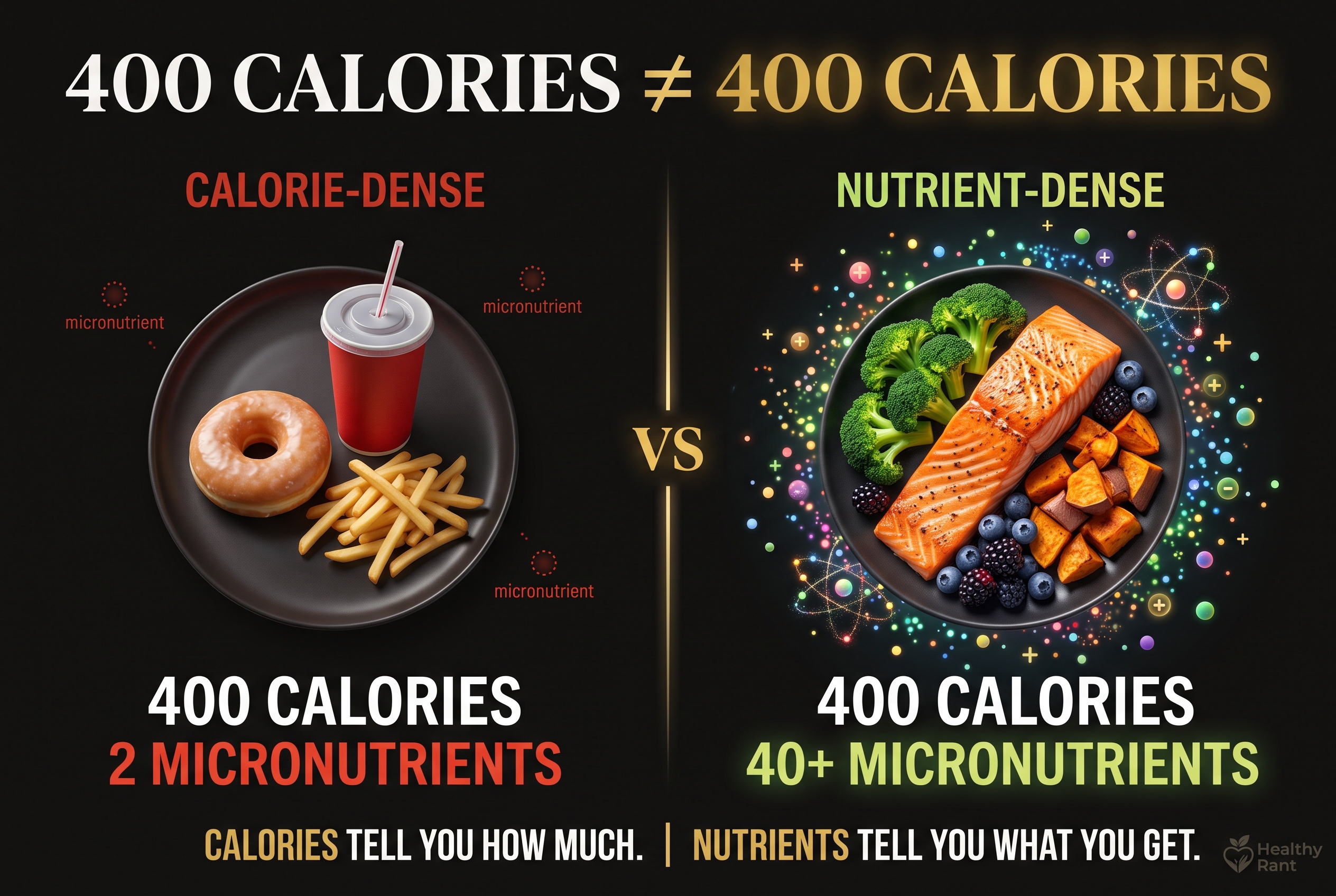
Most people think nutrition is about calories in, calories out. That's incomplete. Two people can eat the same calories and get completely different metabolic results based on what they eat.
Preventative nutrition asks: Does this food provide micronutrients my body needs? Does it trigger inflammation? Does it support metabolic flexibility or destroy it? Does it feed disease or prevent it?
This framework produces different eating patterns than calorie counting or macro tracking alone.
Why Preventative Nutrition Is Your Leverage Point
Nutrition is the daily variable you control. You make dozens of eating choices every day. Compound those choices over months and years, and nutrition becomes your primary determinant of disease risk.
Research from Walter Willett, Robert Lustig, Mark Hyman, and others shows that dietary patterns are responsible for more preventable disease than any other modifiable factor. More than exercise, more than stress, more than sleep.
The catch: most people eat for immediate satisfaction, not long-term prevention.
Here's what preventative nutrition prevents:
Type 2 diabetes and metabolic syndrome — Stable blood sugar, insulin sensitivity, and metabolic flexibility come from food choices, not medication.
Cardiovascular disease — Inflammation markers, lipid profiles, and arterial health are driven by dietary patterns, not genetics.
Cognitive decline — Micronutrient status, blood sugar stability, and inflammatory load predict cognitive aging. Food is brain medicine.
Chronic inflammation — Most people live in a state of low-grade inflammation from food choices. Preventative nutrition turns this off.
Obesity — Not from overeating, but from metabolic dysregulation caused by the types of food being eaten.
Get nutrition right, and prevention becomes automatic.
Key Components of Preventative Nutrition
What the science shows actually works:
How Preventative Nutrition Connects to the Other Pillars
Preventative Nutrition → Metabolic HealthYour food choices are the daily input that determines metabolic health. You can't be metabolically healthy eating processed foods, regardless of calories.
Preventative Nutrition → LongevityDietary patterns are the strongest predictor of lifespan in epidemiological research. What you eat today determines how you age.
Preventative Nutrition → Exercise PhysiologyTraining creates nutrient demands. Without proper nutrition, your body can't adapt to training or recover from it.
Preventative Nutrition → Neurological OptimizationYour brain consumes 20% of your body's energy and requires specific micronutrients for neurotransmitter production and brain health. Poor nutrition impairs focus, mood, and sleep.
Get Started: Three Simple Principles
Forget calorie counting. Start here:
- 11. Eat mostly whole foods — Foods with one ingredient or minimal processing. Meat, fish, eggs, vegetables, fruit, nuts, seeds, legumes. This alone eliminates most processed sugar and unhealthy additives.
- 22. Prioritize protein and vegetables — Protein at every meal (0.7-1g per pound of body weight daily). Vegetables at every meal (variety and quantity). This covers your micronutrients and regulates hunger.
- 33. Eliminate liquid calories — Cut out sugary drinks, most alcohol, and calorie-dense oils added during cooking. This alone reduces metabolic confusion and improves satiety.
That's it. Three principles that align with prevention and naturally produce metabolic health.