
Your brain runs the show. It controls what you eat, how you move, whether you sleep well, how you handle stress, and whether you stick with health changes or quit after three weeks.
Neurological optimization isn't about "biohacking" or nootropics. It's about understanding how your brain and nervous system actually work, then using that knowledge to make change automatic instead of relying on willpower.
What Neurological Optimization Actually Means
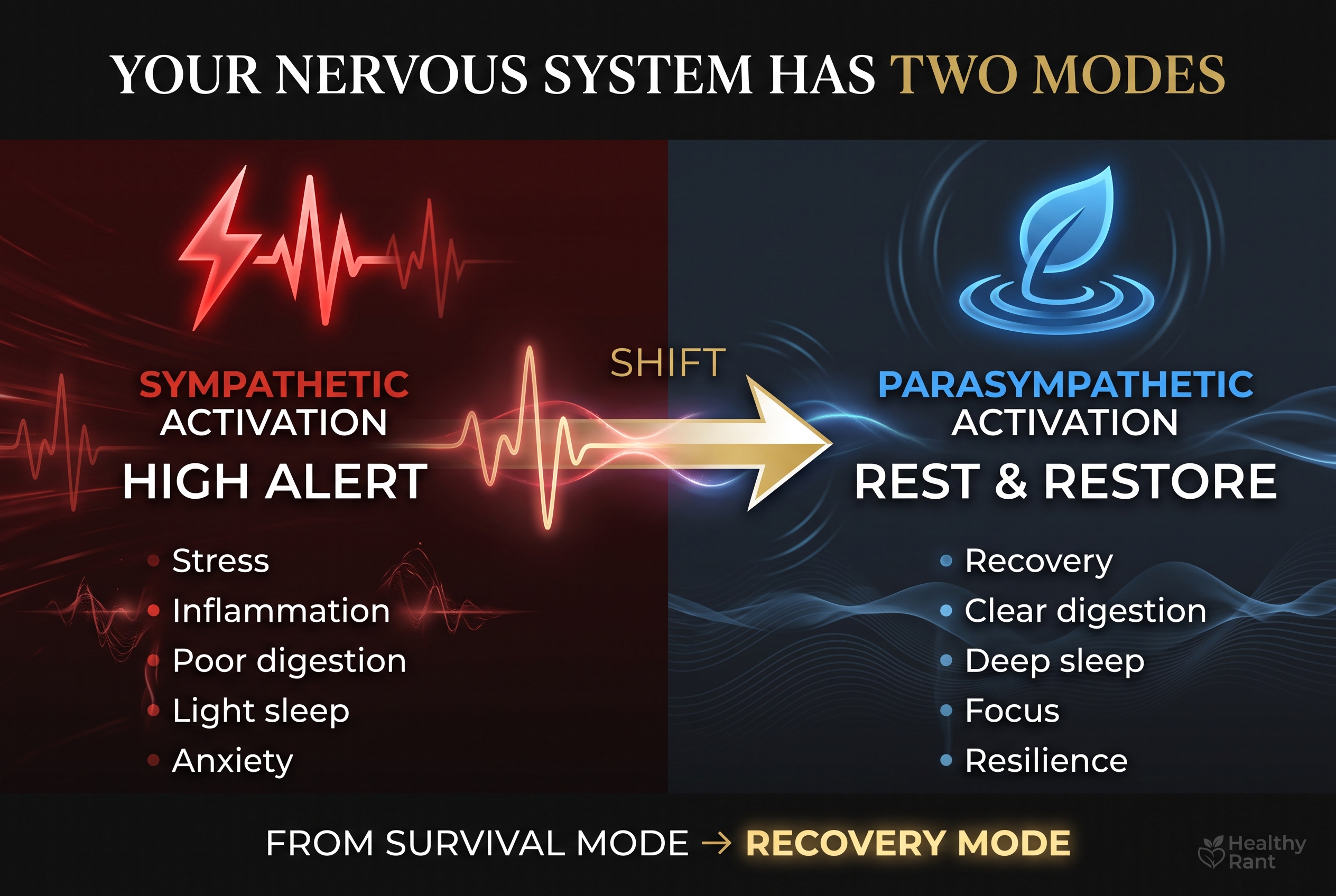
Your nervous system has two modes: sympathetic (fight-or-flight, high alert) and parasympathetic (rest-and-digest, recovery). Most people live in constant sympathetic overdrive.
Your brain creates habits through repetition and reward. Most people try to change habits through willpower instead of understanding how habits actually form.
Your sleep isn't optional—it's when your brain clears metabolic waste and consolidates memory. Poor sleep accelerates aging and disease onset.
Neurological optimization is systematically upgrading how your brain and nervous system function so that healthy behavior becomes the path of least resistance, not a constant battle.
This is leverage. Fix your neurology, and everything else becomes easier.
Why Your Brain Is the Bottleneck
You know what to do. Most people know they should eat better, move more, sleep longer, and manage stress. The gap between knowing and doing is neurological.
Here's what gets in the way:
Autonomic dysregulation — Your nervous system stays stuck in sympathetic (threat detection) mode. You can't digest properly, your sleep is light, your recovery is poor, and stress feels constant.
Habit resistance — Your brain is wired to conserve energy and repeat patterns, even bad ones. Trying to change through willpower is fighting your neurology.
Sleep deprivation — When your brain doesn't get deep sleep, it becomes more reactive, more crave-driven, and less capable of rational decision-making. Poor sleep makes everything harder.
Attention fragmentation — Constant distraction rewires your brain toward reactivity. You lose the ability to focus, plan, and execute.
Reward dysregulation — Your dopamine system gets rewired toward quick hits (social media, sugar, distraction) instead of long-term reward (health, capability, mastery).
Fix these, and behavior change stops being hard.
Key Components of Neurological Health
What the science shows matters:
How Neurological Optimization Connects to the Other Pillars
Neurological Optimization → Metabolic HealthA dysregulated nervous system keeps you in sympathetic overdrive, which impairs digestion, increases inflammation, and makes weight loss impossible. Nervous system recovery is metabolic recovery.
Neurological Optimization → LongevityChronic stress and poor sleep accelerate aging at the cellular level. Nervous system regulation and sleep quality are direct longevity levers.
Neurological Optimization → Exercise PhysiologyTraining stresses your nervous system. If you can't recover from that stress (through sleep and parasympathetic activation), you overtrain and get injured. Recovery is neurological.
Neurological Optimization → Preventative NutritionA dysregulated nervous system drives cravings, impairs satiety signaling, and makes you eat for emotion instead of nutrition. Fix your nervous system, and food choices become easier.
Get Started: Three Immediate Changes
You don't need to optimize everything at once. Start here:
- 1Anchor your sleep schedule — Same bedtime, same wake time, every day (including weekends). Light exposure within 30 minutes of waking. No screens 1 hour before bed. This alone resets your nervous system.
- 2Build 10-minute parasympathetic practices — Deep breathing (4-second inhale, 6-second exhale), cold water face immersion, or gentle stretching. Do this once daily. This trains your ability to shift out of sympathetic mode.
- 3Eliminate one source of constant distraction — Pick one: social media during meals, phone in the bedroom, or news feeds before bed. This rebuilds attention control.
These three changes improve sleep, reduce stress responsiveness, and make behavior change easier. Everything else builds from here.